AI Agent Builders Need Two Kinds of Human Context
An AI agent can have your data and still miss your business problem.
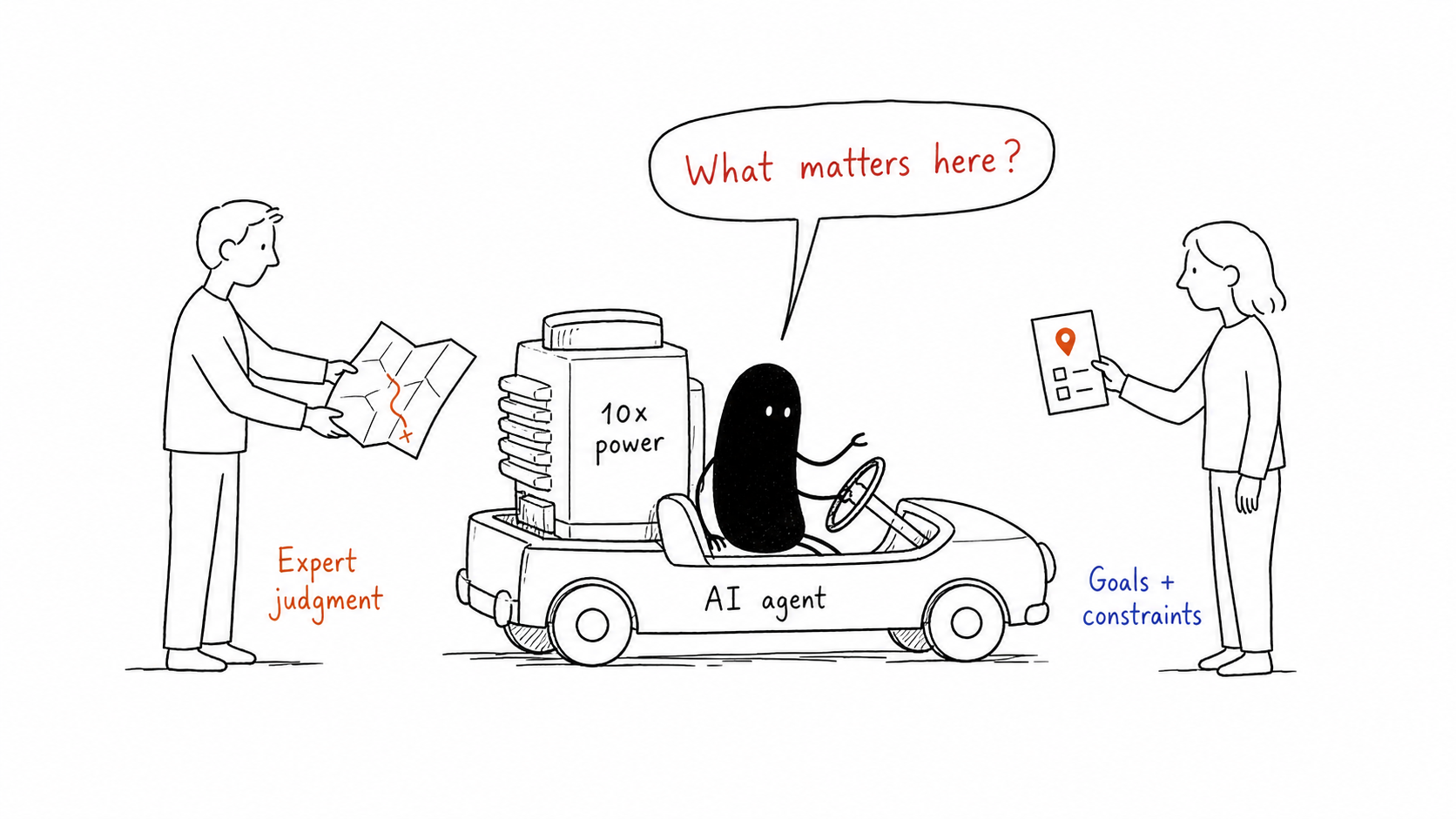
I've been building agents, talking with startup founders and one-person company builders, and learning from AI-native communities.
The question I've been exploring: what makes an agent useful enough that someone will pay for it?
I keep coming back to two kinds of human input.
First, Expert Judgment.
No matter how good the models, memory, tools, and AI judges you build are, there will always be limitations and hallucinations. Experienced practitioners help establish which information is current and reliable, evaluate answers against real situations, and investigate mistakes, then feed those findings back to the Agent.
A real human lawyer, doctor, or marketer knows which details are necessary for a recommendation.
Second, User Context.
This is the part many builders underestimate.
Take an advertiser asking: “How can I improve my campaign performance?”
Even with access to campaign data, the agent may still need to ask:
- Are we launching a new product or growing an established brand?
- Does “improve” mean more sales, lower acquisition costs, or higher profit?
- Can the budget increase, or is spending fixed?
- What are the margins, and how quickly must acquisition costs be recovered?
- Can inventory and the sales team handle more demand?
Recommending more spend makes little sense if the product is about to sell out. An answer based on many other advertisers' needs can look fancy but may make no sense if the assumption is wrong.
The agent may retrieve some of this context from the existing database. It shouldn't silently guess the rest.
This creates a dilemma for agent builders. They need user context to deliver useful results, but worry that asking for it will make people leave. Asking users to invest effort can be a hard sell when the promise is “10x productivity.”
I think builders should actively encourage users to spend time explaining their goals, testing answers, and correcting the agent. They also need to make that participation easier and demonstrate why it matters.
For nontechnical users, this means investing seriously in the experience: guided questions, examples of useful context, and explanations of why a particular detail matters. Show how a recommendation changes after the user clarifies a constraint. Let users save relevant context so that effort carries forward.
Someone who doesn't know what to tell an agent should get help figuring it out.
Alongside better models, agent architecture, and expert input, we need better ways to help people work with these systems.
If our product depends on user context to deliver the results we promise, helping users provide that context is part of our job.